Building the Logistics of Recovery: HUCUS Joins Ukraine Recovery Conference 2025 in Rome
By HUCUS Team
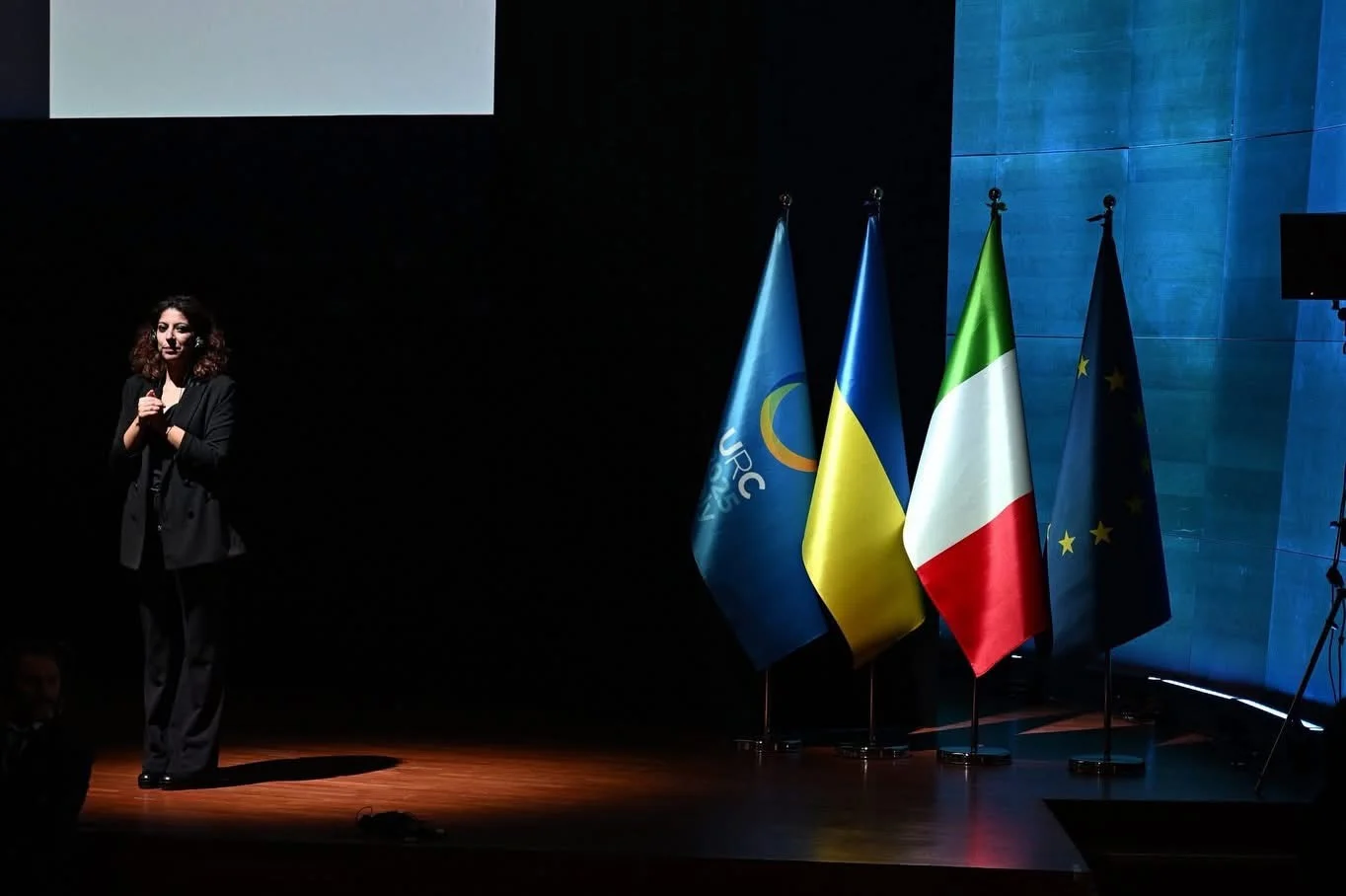
HUCUS participated in Ukraine Recovery Conference (URC) 2025 in Rome, hosted by Italy's PM Giorgia Meloni's office. The conference produced over 200 agreements worth approximately EUR 10 billion. HUCUS held coordination meetings with A.P. Moller-Maersk, MSC Ukraine, Ukrainian Railways, the Tony Blair Institute, and Robert Bosch Stiftung.
HUCUS Foundation participated in the Ukraine Recovery Conference (URC) 2025 in Rome, joining international leaders and industry giants to discuss the future of Ukraine’s reconstruction. Organized by the Government of Italy and the Office of Prime Minister Giorgia Meloni, this high-level forum served as a critical meeting point for aligning the humanitarian logistics of today with the infrastructure demands of tomorrow. For HUCUS, Rome was an opportunity to present our documented nonprofit corridor as a model for scalable recovery logistics.
The conference brought together heads of state, including President Volodymyr Zelenskyy, and strategic economic leaders to forge over 200 agreements totaling approximately EUR 10 billion. HUCUS positioned its mission within this broader context, emphasizing that the physical rebuilding of Ukraine requires not just financial investment, but a professional, transparent supply chain capable of moving millions of tons of cargo efficiently across borders.
Logistics as a Foundation for Reconstruction
Recovery is not a future event; it is a process that begins with every relief shipment delivered today. At URC 2025, the HUCUS team engaged in deep coordination meetings with key infrastructure and logistics partners, including A.P. Moller - Maersk, MSC Ukraine, and Ukrainian Railways. We also met with policy and academic leaders from the Tony Blair Institute and Robert Bosch Stiftung to discuss the long-term governance of humanitarian corridors. These conversations are essential for our 2026+ strategy, which envisions HUCUS transitioning from emergency relief to a primary logistics operator for sustainable reconstruction.
The presence of global transport leaders like Flylot and other aviation partners highlighted the multifaceted nature of the recovery task. HUCUS remains committed to building the "invisible bridge" that connects international donors with the ground reality in Odesa, Kyiv, and frontline regions. By strengthening our ties with these global operators, we are ensuring that HUCUS can scale its throughput to meet the massive upcoming demands of rebuilding Ukraine’s infrastructure.
Why Strategic Recovery Planning Matters
For donors and corporate partners, the Rome conference sent a clear signal: the reconstruction of Ukraine will be one of the most complex logistical operations of the century. HUCUS provides the "Proof over Emotion" framework needed to manage this complexity. By documenting every container and ensuring strict chain-of-custody, we build the institutional trust required for large-scale investment. Our participation in Rome confirms HUCUS as a recognized partner at the highest levels of the international recovery dialogue.
- URC 2025 Rome — aligning international investment with local logistics.
- EUR 10 Billion in agreements focused on Ukraine's reconstruction.
- Strategic Meetings with Maersk, MSC, Bosch, and Tony Blair Institute.
- 2026+ Strategy — transitioning from relief to large-scale recovery logistics.
Join the Future of Ukraine’s Recovery
The infrastructure for tomorrow is being built today. You can support the HUCUS mission to expand our logistics corridor by making a tax-deductible donation. If your corporation or foundation is looking for a professional logistics partner to support reconstruction projects in Ukraine, explore partnership opportunities with HUCUS. Together, we can ensure that the resources for recovery reach their destination safely and efficiently.